
Egypt: When to Go, Where to Land, What to See
Egypt has long occupied a special niche within world travel. Historical wonders, desert vistas, and river excursions along the Nile lure millions annually. All the same, despite its charms, Egypt is not always easy travel. Roads are frequently crowded, infrastructure beyond big centers can be minimal, and travel between famous sights can take many hours longer. For these and other reasons, there’s a strong argument for private jet charter in Egypt – safe and efficient while facilitating access to remote areas beyond the reach of commercial flights.
Reviewed by Kevin Singh, Founder · Fact-checked against Icarus Jet charter and operations data · Last updated 12 September 2026
The guide
Infrastructure and road safety
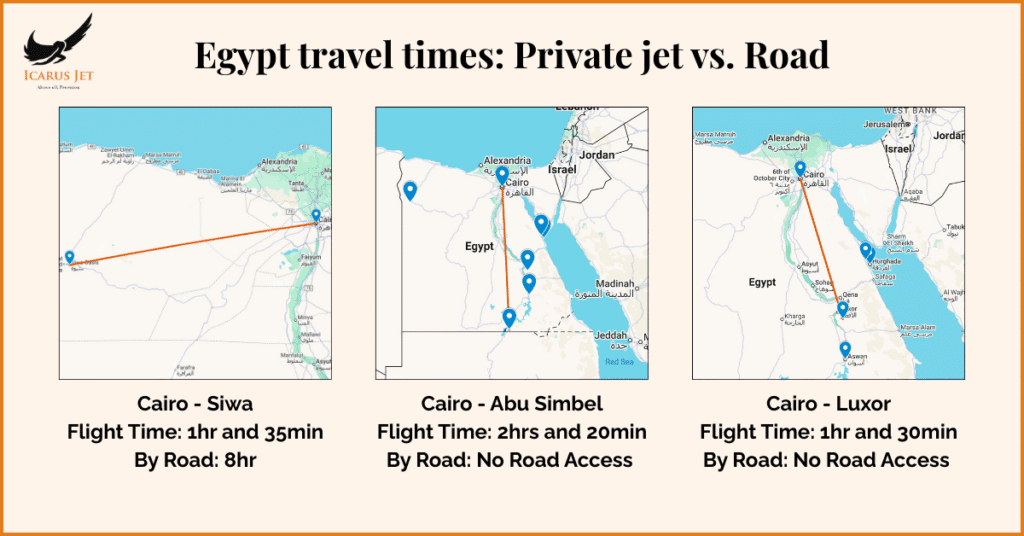
Although Cairo and Alexandria are significant cities with developed airports, interior Egypt is linked mostly by roads that do not necessarily have international safety features. Road trips of long distances deep into the desert are often unreliable, with few road services and diverse road conditions. It can take up to 8 or 10 hours by road from Cairo to get to Siwa Oasis, and it is not always the best of routes if one is after both protection and expediency.
Similarly, trips to archaeological wonders like Abu Simbel or Luxor can involve long domestic flights by car or reliance on domestic flying schedules that are not necessarily flexible. Chartering a private jet in Egypt puts these problems aside by offering point-to-point flights while eliminating road hazard and drastically cutting travel time.
Avoiding traffic in Cairo
Cairo is known for traffic jams and is often ranked as one of the top 3 most congested cities in Africa. Accessing Cairo International Airport from the city center takes more than two hours at peak times, and hence travel planning is unreliable. At the airport itself, passengers are greeted with additional lines, pre-screening and delays before boarding typical of commercial airline flights.
Passengers on private aircraft avoid these hindrances. Dedicated terminals for private aviation allow quick boarding processes that frequently include arrival just 30 minutes before departure. This efficiency translates to minimized time lost in traffic and terminals and increased time freed up to experience the marvels of nature and culture of Egypt.
Using smaller airports
Among the least recognized private jet travel benefits of Egypt is the access it allows to smaller airports that are hard to reach. Egypt’s geography encompasses the Mediterranean coast and the Sudanese frontier and has numerous points of destination with airstrips which are unserved by commercial airlines. Direct access is available to these points with a private jet charter and can cut substantially transfers of many hours.
- Siwa Oasis: Located near the Libyan border, Siwa is one of Egypt’s most remote and enchanting destinations. By road, it requires a grueling 8–10 hours from Cairo. By private jet, the journey is reduced to a short flight directly to Siwa’s nearby airstrip.
- Abu Simbel: Renowned for its double temples carved into the mountain face, Abu Simbel is easiest accessed by air because it is in southern Egypt near the Sudan. Private flights deliver passengers at their own pace and do not rely on spotty commercial routes.
- Luxor: It is the gateway to the Valley of the Kings and the Karnak Temple. Private planes offer direct and convenient flights between Cairo or Aswan and Luxor and do not need to resort to busy commercial flights.
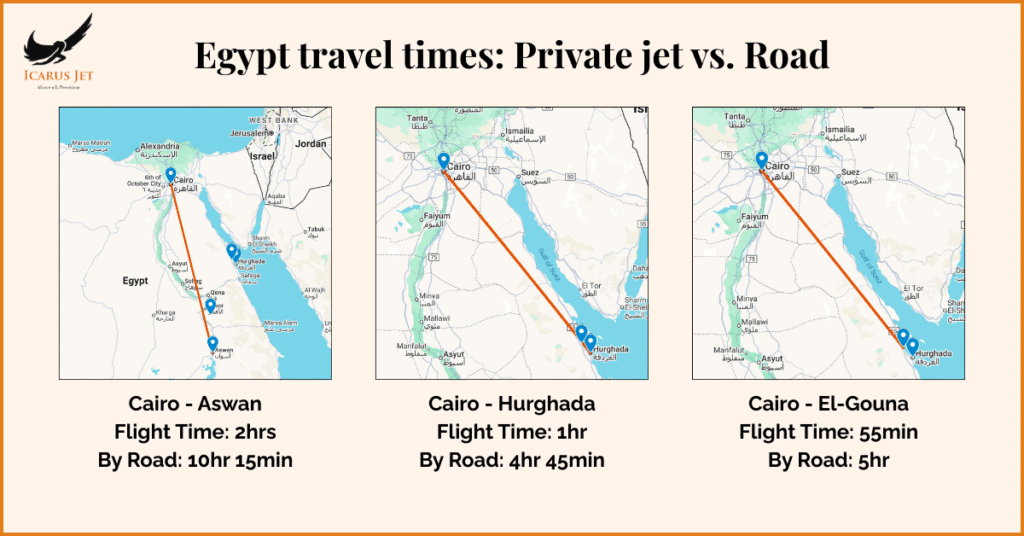
- Aswan: Known for its Nubian heritage, islands, and gateway to Abu Simbel, Aswan is seamlessly integrated by private charter.
During non-stop flights from these locations, one can utilize their ground time and convert what may otherwise become logistical inconveniences into a hassle-free journey.
Comfort, control and group travel
Chartering a private plane in Egypt means that the traveler is guaranteed of discretion, luxury, and personalized attention at every travel destination. Whether alone or with family or a couple of friends, being able to sit peacefully and comfortably in a spacious cabin makes travel part of the vacation. Catering can be personalized, timings can be changed, and discretion can be assured – an immense advantage when visiting a destination as vibrant as Egypt.
Though private flying is synonymous with exclusivity, it can prove economical in some situations. Groups of travelers, families, business or tour groups can discover great value in splitting the expense of a charter. Compared to the cost of acquiring several first-class seats, especially on itineraries where commercial connections are undesirable, chartering a private plane quite often makes sense.
In other words, a group aircraft charter service takes advantage of a direct, personalized flight at a fraction of the cost of smaller private jets, without jeopardizing the private aviation experience.
When to go
Seasonality matters more in Egypt than most first-time visitors expect. October through April is the comfortable window, cool enough to walk archaeological complexes and desert sites, and it is also the peak, so aircraft, crew and hotel availability all tighten. May through August is considerably hotter, particularly in Upper Egypt, and works best for the Red Sea coast where the resorts are built for it and the sea breeze moderates the afternoon. The shoulder months, October and April, give the best balance of weather, availability and crowd levels.
Where private aviation earns its place
Egypt is large, and the best known sites sit hundreds of kilometres from Cairo. Luxor, Aswan, Abu Simbel and the Siwa Oasis all have domestic service, but on thin schedules with long waits and almost no direct connectivity between the secondary points, which forces itineraries back through Cairo between each leg. Charter removes the backtracking, reaches smaller runways closer to the sites, and lets a group hold its own timings rather than the airline’s.
The aircraft follow the group rather than the other way round. A nine-seat King Air suits a family moving between Cairo, Luxor and the coast. Larger touring parties, weddings and corporate programmes move onto regional aircraft and airliner charters. Where the arrival is long haul and comfort matters, a large-cabin jet covers the inbound leg and a turboprop handles the internal hops.
The itinerary most trips are built from
Cairo and Giza anchor almost every first visit: the pyramids and the Great Sphinx, the Egyptian Museum and the Grand Egyptian Museum. Luxor and Aswan carry the temple sites and the Nile itself, and are the classic internal pairing. Abu Simbel sits far south and is where the time saving of flying is most obvious. The Red Sea, El Gouna, Hurghada and Marsa Alam, is where an itinerary usually ends. Siwa, out towards the Libyan border, is the one that is genuinely hard to reach any other way.
Beyond the obvious: the Western Desert
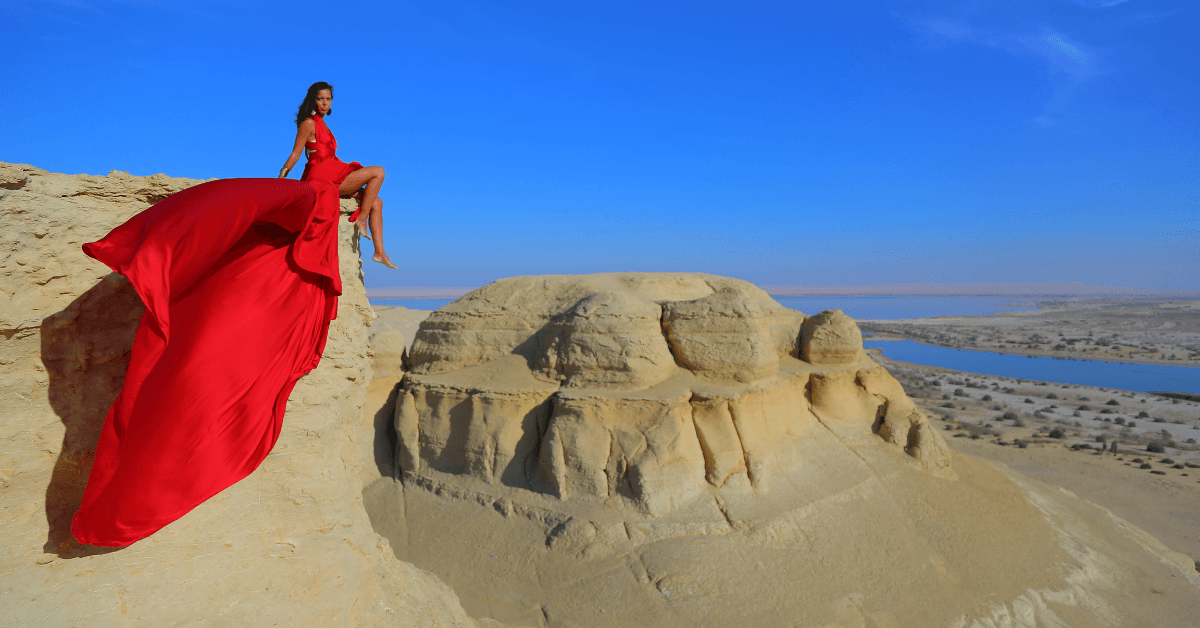
Few visitors get past the Nile corridor, which is the reason to mention it. The Bahariya Oasis is roughly five hours from Cairo by road and is the gateway to the Western Desert. From there the drive runs to Crystal Mountain, where quartz covers the terrain, and through Aqabat Valley to the White Desert, where salt and calcite deposits have built pale formations and wind erosion has cut the rock into shapes that give the area its name. Near Ain Khadra stands an acacia locally known as El Santa, spiralling in a full circle and reckoned to be around three centuries old. It is a two or three day extension, not an afternoon, and it is the part of Egypt that repeat visitors come back for.
Conclusion
Selecting a private jet charter in Egypt is not simply about ease; it is about reconsidering the way of experiencing the nation. By eliminating logistical burdens, visitors are free to move beyond Cairo and Giza’s pyramids and visit desert retreats and Nubian villages and ancient sights far south. Here, private aviation is a connector of Egypt’s ancient heritage and lesser-seen landscapes and allows a richer and more complete experience.
Egypt is a nation that values curiosity, yet distances and infrastructure can test even the most experienced traveler. By opting for an Egypt charter plane, clients gain the freedom of travel on their terms – whether it is flying Cairo-Siwa or connecting Luxor-Aswan-Abu Simbel. From time-saving and comfort advantages to greater safety and cost-efficiency within a group of passengers, private charters within Egypt emerge as a very attractive proposition for those wishing to optimize their time within this remarkable nation.
Frequently Asked Questions (FAQs)
1. Is it safe flying by private jet in Egypt?
Yes. Egypt private aviation complies with worldwide safety requirements while chartering a jet with an experienced team like Icarus Jet adds another layer of comfort, experienced, and dedication to the experience.
2. Where can you travel from Egypt using a private charter plane?
Popular routes are Cairo to Luxor, Aswan, Siwa, and Abu Simbel. Relatively small airports within the country enable direct access to locations often inaccessible by commercial flights.
3. What are the costs of flying private when compared to commercial aviation?
Private flights are pricier when flying alone. However, when flying with family or a group of individuals, cost per head can work as a cost-effective option with all the perks of private aviation.
4. How much time can a private jet flight in Egypt save?
Journeys of 8-10 hours by road can now be reduced to a one or two-hour flight. Even routes now covered by commercial flights become faster with quick boarding and non-stop travel.5. Is it possible for anyone to charter a plane at short notice in Egypt?
Though last-minute requests can be accommodated, it is advisable to book 1-2 weeks ahead of time, particularly in the high travel seasons (October through April).
Request a charter
Questions
Egypt questions the desk gets
When is the best time to visit Egypt?
October through April is the comfortable window, cool enough to walk archaeological complexes and desert sites, and it is also the peak. May through August is considerably hotter, particularly in Upper Egypt, and works best for the Red Sea coast. October and April give the best balance of weather, availability and crowds.
Why fly private inside Egypt rather than domestically?
Because the distances are long and the domestic schedules are thin, with almost no direct connectivity between the secondary points. That forces itineraries back through Cairo between each leg. Charter removes the backtracking and reaches smaller runways closer to the sites.
Which airports do private jets use in Egypt?
Cairo for the pyramids and the museums, Luxor and Aswan for the temple sites, Abu Simbel in the far south where the time saving is most obvious, and the Red Sea fields at Hurghada and Marsa Alam for the coast. Siwa, out towards the Libyan border, is the one that is genuinely hard to reach otherwise.
How many days does a typical Egypt itinerary need?
Four to seven for Cairo, Luxor and Aswan with a Red Sea stop. Adding the Western Desert, Bahariya, Crystal Mountain and the White Desert, is a two or three day extension on top rather than an afternoon, because it is a long drive from Cairo.
What aircraft suits an Egypt itinerary?
It follows the group. A nine-seat turboprop or light jet handles a family moving between Cairo, Luxor and the coast. Larger touring parties, weddings and corporate programmes move onto regional aircraft. Where the arrival is long haul, a large-cabin jet covers the inbound and a smaller aircraft handles the internal hops.
Do I need permits to fly privately within Egypt?
Yes, and they are arranged by the desk rather than by you. Landing permits and domestic authorisations both apply, and lead times are real, which is one reason an Egypt itinerary is worth settling earlier than a European one.
Where this sits
The guides around this one
Talk to the desk
Pricing a real trip?
Send the dates, the passengers and the stops. You get a named aircraft, itemised pricing, the operator checks done and a number you can hold us to.
Contact UsPrefer to talk? Call +1 888 277 7203 or email charter@icarusjet.com. The desk is staffed 24/7.