
Saudi Arabia
Airport Guides
Saudi Arabia is a landing-authorisation market. The aircraft is rarely the constraint; the permit is. Six international gateways serve the Kingdom, and which one you file into depends as much on the clearance you can obtain as on where the passengers are going.
Reviewed by Kevin Singh, Founder · Fact-checked against Icarus Jet fleet and airport operations data · Last updated 11 September 2026
The Airports
Saudi airports we operate into
One guide per airport, covering what the field offers and where it sits in the Kingdom.
Operating Detail
Saudi Arabia briefings
The operational notes behind the airport choice.
Operating into Saudi Arabia
What is different about flying a private jet into Saudi Arabia
Saudi Arabia does not run on PPR or slot applications the way Europe does. Every arrival, including a fuel stop or a crew rest, needs a landing permit from the General Authority of Civil Aviation, filed through an accredited local agent, typically in 48 to 72 hours, with overflight permits in about 24. GACA works Sunday to Thursday and slows around Hajj, Ramadan and the holidays. Since 1 May 2025 a foreign-registered aircraft may fly charter between Saudi cities without a local partner, though the internal leg still needs a domestic permit. On the ground, alcohol is sealed by a Saudi inspector on arrival and crew stays over 72 hours need special approval. The Kingdom runs on Arabia Standard Time, UTC+3, all year; summers bring sandstorms that force flight plan changes.
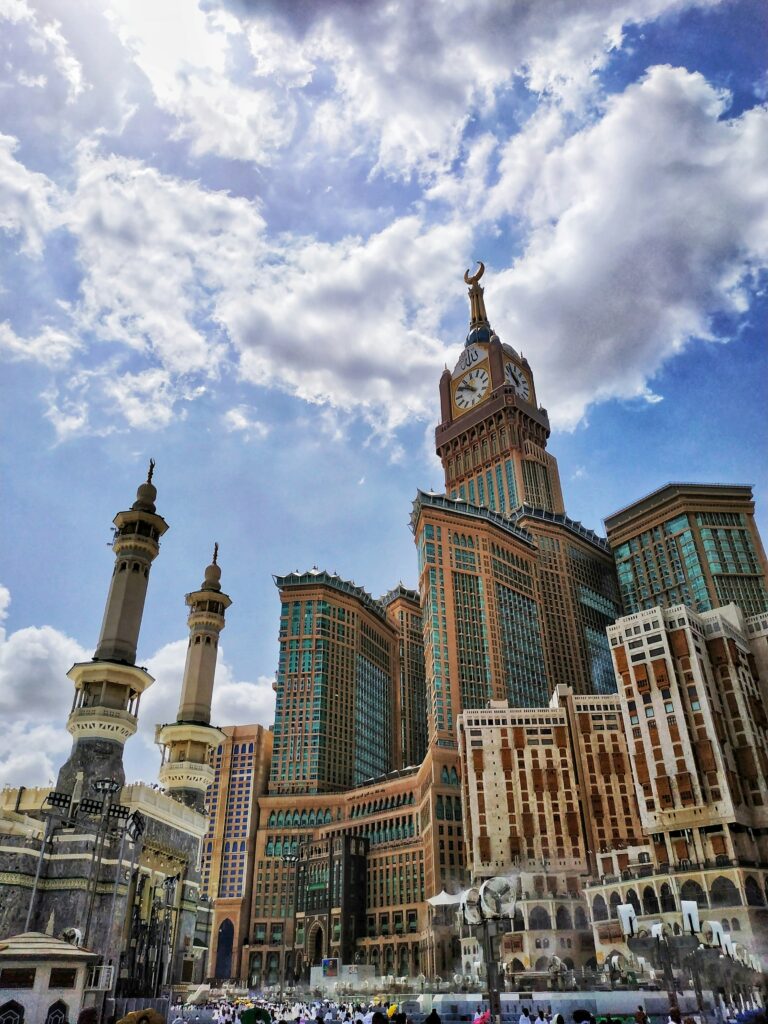
The three big gateways serve different parts of a very large country; choose by destination. King Khalid International at Riyadh has two 13,796 foot runways at 2,049 feet, Category 9 fire cover and no airport slot or PPR. King Abdulaziz International at Jeddah has three parallel runways, two of 13,123 feet, at 48 feet on the Red Sea, Category 10 cover, and is the gateway to Makkah, about an hour and a half away by road. King Fahd International at Dammam has two 13,123 foot runways at 72 feet and, since February 2026, the Kingdom's first dedicated general aviation terminal with customs, immigration and quarantine at the FBO. Dammam is the exception on paperwork: it is slot coordinated and handling is mandatory.
Madinah is the other half of most Umrah itineraries, with a 14,222 foot main runway at 2,151 feet and Category 10 fire cover; the desk plans Jeddah and Madinah as one trip. Prince Naif bin Abdulaziz at Qassim serves Buraydah, roughly four hours from Riyadh by road, on a single 9,843 foot runway at 2,126 feet; it is not on the airports of entry list, so an international arrival there is confirmed with the airport before filing. Hail International is the highest Saudi field we cover at 3,331 feet, with a 12,204 foot runway, Category 7 cover and customs on the field since 2017. For a Hail destination there is no practical alternative.
The constraint that catches crews out is the permit file itself. The routing on the permit is prescribed and a change needs GACA approval, the fuel uplift location must match the permit, the insurance must name Saudi Arabia explicitly, and the radio licence must carry both the registration and the operator name, because a mismatch stalls the approval. A request filed on a Thursday afternoon waits until Sunday. The desk files through its accredited agent with 72 hours as the working figure, checks every document against the aircraft before it goes, declares any domestic sector with the first permit, and runs departure performance at realistic temperatures on the fields above 2,000 feet.
Send the dates, the aircraft and the stops, with firm dates weeks ahead in Hajj, Ramadan, the Eids, Formula 1 week in Jeddah and Riyadh Season. The file needs the complete itinerary, registration, airworthiness, the AOC where it applies, the noise certificate, the radio licence, the crew and passenger General Declaration, an invitation letter and the receiving party details. Send a fuel release and the desk coordinates the into-plane agent, orders catering 24 hours ahead and holds the crew hotels.
Facts checked against the GACA Saudi Arabia publications, the airport guides above and Icarus Jet operations data.
More Country Guides
Airport guides beyond Saudi Arabia
Three more country indexes, each covering codes, runway and handling for every airport we operate into.
Chartering
More of the library
Return to Airport Guides, browse the wider Aviation Library, or see all charter destinations.