
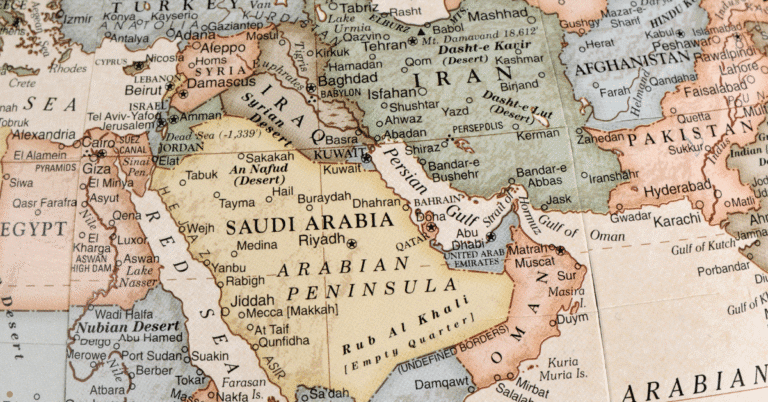
What Private Jet Pilots Need for Middle East Overflight Permits
Prevent expensive delays. Discover the required overflight permit requirements throughout the Middle East and how Icarus Jet guarantees mission success for private aviation.
Reviewed by Kevin Singh, Founder · Fact-checked against Icarus Jet fleet and airport operations data · Last updated 10 September 2026
The guide
Nearly every Middle East country requires explicit overflight permission for each airspace sector, and approvals go exactly under flight plan Item 18. CAAs are generally closed Fridays and Saturdays. Aircraft documents, crew and passenger numbers and nationalities are needed at least three days before departure. Egypt and Saudi Arabia require fuel uplift location and quantity. Confirm permits 12+ hours before departure. In Saudi Arabia, onboard alcohol must be sealed and locked.
Flying Over the Middle East: An Issue of Precision and Planning
Overflying the Middle East is less about navigation and more about negotiation. Airspace across the region is strictly regulated, with overflight clearances often influenced by geopolitical pressures, strict regulatory control, and abrupt closure of Flight Information Region (FIR) availability.
In 2025, amidst digital trip planning tools everywhere, overflight permit mistakes are still a leading reason for expensive diversions and delays. At Icarus Jet, we’ve established a network of local agents, connections with CAA (Civil Aviation Authorities) and intelligence that allows customers to fly through the region smoothly – even when things don’t go according to plan.
Furthermore, all overflight permit approvals must be entered precisely under Item 18 of the flight plan, free of typographical errors. Failing to do so may lead to rejections or last-minute delays.
Who Requires Overflight Permits within the Middle East and Why Are They Important
Overflight permission is required over almost all Middle Eastern nations by private and commercial aircraft. Unlike Europe or North America, where some FIRs may be overflown without permission, the Middle East typically demands explicit permission for each airspace sector.
These permits are not regulatory box-ticking. They are necessary for:
- Legal entry and use of airspace: Unauthorized flights may be penalized, involuntarily diverted, or banned.
- Reliability of flight planning: Without guaranteed permits, operators can’t get guaranteed routes or fuel stops.
- Operational security: Some FIRs are bordering active theatres of conflict and require extra attention and routing flexibility.
Key Countries and Lead Times: Know Before You File
Below is a summary of the average Middle East overflight permit lead times, with additional country-specific insights:

Note: While some CAAs occasionally approve permits over holidays or weekends, they are generally closed on Fridays and Saturdays, so submissions must be well timed. In urgent situations, Icarus Jet has succeeded in last-minute filings, though these cases are not guaranteed and we always communicate the potential risk to clients.
Our Operational Approach: Preparing Three Days Ahead
Our standard practice is to receive all relevant flight data at least three days before departure, including:
- Aircraft documents
- Number of crew and passengers
- Passenger nationalities
This window enables us to secure overflight permissions across multiple jurisdictions efficiently and on time.
Saudi Arabia Entry: Essential Operational and Cultural Factors for Flight Crews
Flying into Saudi Arabia requires more than regulatory clearance – it demands local insight, cultural awareness, and a sharp understanding of airport and airspace protocols. From Formula 1 in Jeddah to Umrah jet charters to Medina, Icarus Jet supports Fortune 500 operators and private aircraft of all sizes with end-to-end trip planning into the Kingdom, even for the Hajj pilgrimage to Mecca.
With over a decade of experience and Arabic-speaking dispatchers, we provide support with permits, ground coordination, and route planning into major cities like Riyadh, Jeddah, and Al Ula.
To help flight crew and operators appreciate the distinctive demands of the Kingdom, we also provide pre-flight briefings with local regulations and customs considered. Some of the important factors are:
- Storage of alcohol: All onboard alcohol should be sealed and locked on arrival under Saudi inspection – open only for outgoing departure.
- Cultural customs: Public shows of affection, pork offerings, and gambling are off-limits; non-compliance is punishable by a fine.
- Crew protocol: Female crew can expect restricted use of communal hotel facilities; modest dress is required on and off duty.
- Digital access: VPNs are legal and are recommended to use communication apps like WhatsApp, which may be blocked otherwise.
- Religious observance: Be respectful of prayer times and fasting seasons (e.g., Ramadan) as they impact airport operations and ground service timetables.
What Most Operators Still Lack in 2025
In spite of increased dependence on planning trips using computer programs, several mistakes still plague operators flying over the Middle East:
- Uncoordinated or Incomplete Fuel Uplift Documentation
Egypt and Saudi Arabia require confirmation of fuel uplift location and quantity. A mismatch may result in rejected permits or post-flight charges. - Disregarding Real-Time NOTAMs
Airspace status in Iraq, Syria, or Iran can shift quickly. Operators failing to verify NOTAMs close to departure risk in-flight rejections or diversions. - Depending on General Trip Assistance Providers
Most non-regional trip planners lack local agents, which leads to poor holiday planning, miscommunication, and delayed post-hours coordination.
Icarus Jet mitigates these issues through trusted Middle East partners in Saudi Arabia, ensuring smoother workflows.
How Icarus Jet Streamlines Overflight Permit Approvals in the Middle East
With years of operating experience and a presence that spans the Gulf and North Africa, Icarus Jet is strongly placed to minimize friction in obtaining Middle East overflight permits.
Our Support Includes:
- Local agents in Saudi Arabia, UAE, and Egypt
- 24/7 geopolitical risk alerts
- Duplicate routing schedules with 30-minute turnaround
- Clear client communication for last-minute requests, including disclaimer if timing is too tight for guaranteed success
Best Practices for Dispatchers and Pilots
Whether flying ad-hoc or managing a complex ferry operation, follow these critical guidelines:
- File permits using country-specific formats and exact document copies
- Confirm permit approval status 12+ hours before departure
- Avoid risky jurisdictions without valid insurance (e.g., Iraq for N-reg aircraft)
- Collaborate with handlers that maintain direct diplomatic and CAA links
Trusted by Operators Worldwide
From corporate shuttles between the Gulf to seasonal religious charter flights, Icarus Jet has facilitated thousands of overflights throughout the Middle East. Whether your flight destination is the Red Sea, the Persian Gulf, or the Arabian Desert, our staff guarantees your permits are obtained, your routes are arranged, and your mission remains on schedule.
Questions
Middle East overflight permits: questions the desk gets
Overflight approvals rarely arrive on a predictable schedule. Obtaining the Impossible looks at what the process involves when the timeline is measured in hours rather than working days.
Do I need a separate overflight permit for every Middle East country?
Yes. Each FIR issues its own permit and the approval number must be entered in Item 18 of the flight plan exactly as issued. A missing or mistyped number is the usual reason a flight plan is rejected.
How far ahead does the desk need the documents?
At least three days out: aircraft registration, airworthiness, insurance and noise certificates, the AOC where applicable, and the crew and passenger numbers and nationalities. Every permit status is confirmed again twelve hours before departure.
When are the Middle East civil aviation authorities closed?
Most close on Friday and Saturday, and several slow around Ramadan and the national holidays. A request filed late on Thursday waits until Sunday.
Does the fuel uplift matter to the permit?
In Egypt and Saudi Arabia, yes. The uplift location and quantity must match what was filed on the permit, so the desk plans the fuel with the paperwork rather than after it.
What should crews know about landing in Saudi Arabia?
Alcohol on board is sealed on arrival, dress is conservative, a VPN is recommended for messaging apps, and prayer times and Ramadan change ground timings. The Saudi Arabia guide covers it in full.
Can an N-registered aircraft overfly Iran?
Not without diplomatic permits, and FAA rules bar US operators. The desk routes N-registered aircraft around Iran via Egypt and Saudi Arabia or the Caucasus.
Where this sits
The guides around this one
Crossing the Middle East? Filed from the desk
Send the dates, the aircraft and the stops. You get the permits filed, the routing checked against the current picture, handling confirmed, and a number you can hold us to.
Contact Us