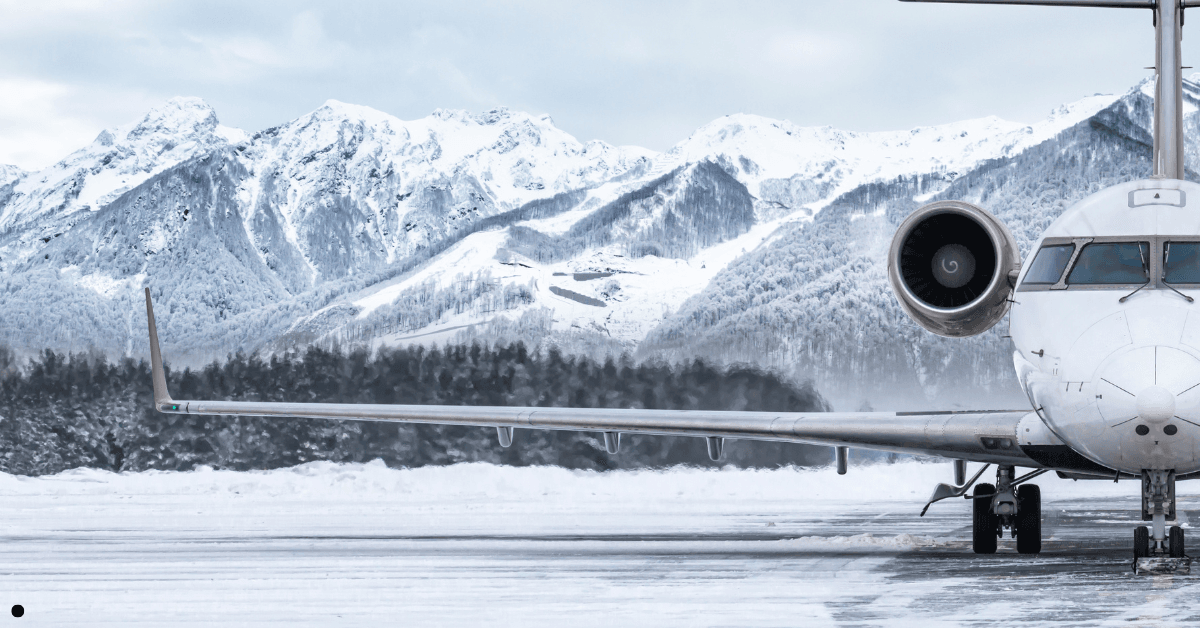
Flying to Canada in winter requires some additional preparation, especially given weather uncertainty and the difficult entry requirements for private jet crews. Climate is indeed the biggest determiner of Canadian winter operations, and crews need to evaluate on the day whether specific flights need to be diverted or cancelled.
This is a discretionary role that protects passengers and crews, and it also underscores the importance of robust operational planning when operating into Canada in winter and the need to partner with a trustworthy trip support partner.

Weather and winter performance considerations
Rapid changes in temperature, visibility, precipitation, and wind characterize Canadian winter weather. Unforeseen snow or freezing rain can exceed aircraft limitations in a hurry, so crews must be flexible in their decision-making.
Flight cancellations due to deteriorating conditions are not unusual, and they highlight the importance of Captain authority. The final decision rests with the PIC, who evaluates aircraft condition, runway conditions, crew duty times, deicing availability and the overall safety environment. Winter flying in Canada is more predictable when the crew has a clear picture of local conditions and maintains close contact with both trip support and ground handlers.
De-icing at Ottawa/Macdonald-Cartier International
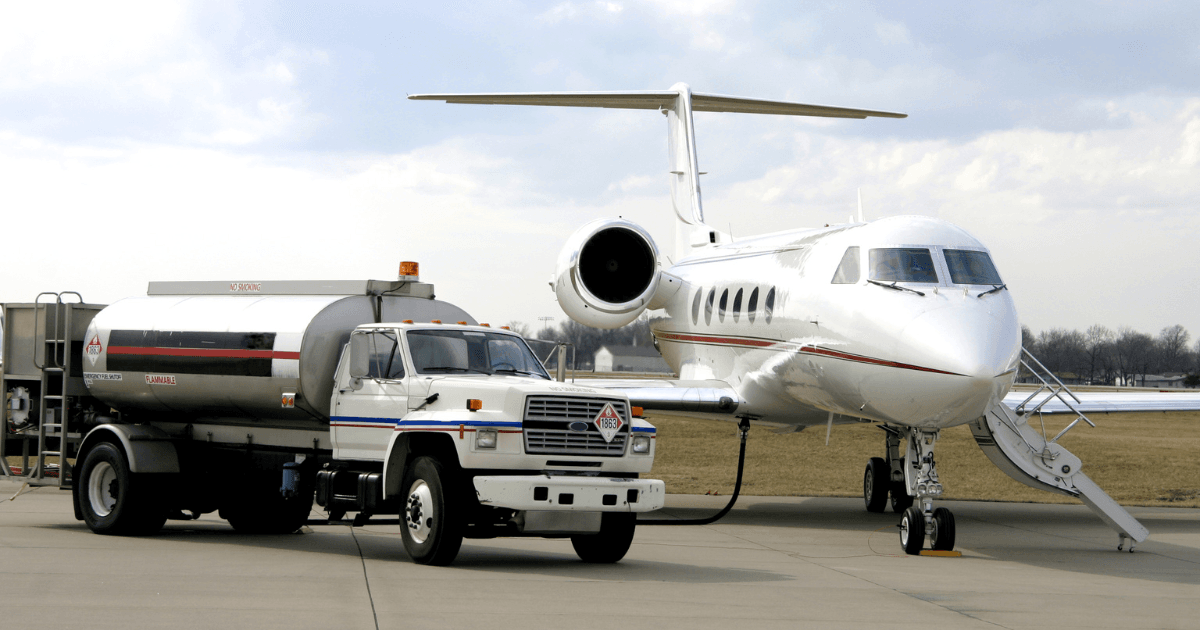
De-icing preparation is one of the key ingredients for a successful winter operation into CYOW. Crews should plan well in advance because no aircraft can be serviced without a completed deicing form that must include a valid credit card.
When it is confirmed, the deicing truck must be requested. The weather in Ottawa could turn bad any minute, and there’s nothing worse than being caught out in the frosty, nasty weather without protection against an unexpected buildup of frost, snow, or ice. Integrating deicing up front into the initial concept maintains a predictable turnaround time and prevents operational logjams.
Part 91 U.S. to Canada operations
Organizing your paperwork for a Part 91 flight from the United States to Canada requires careful precision. The exercise naturally separates into departure requirements from the United States and entry requirements upon arrival in Canada.
1. U.S. departure (CBP/DHS requirements)
Before the aircraft departs the United States, crews must satisfy all U.S. Customs and Border Protection requirements.
| Action / Document | Details& Responsibility | Timeline |
| Electronic Advance Passenger Information System (eAPIS) | The e-manifest must include all crew and passenger information. Dispatchers often handle this, but the PIC remains responsible for accuracy and timing. | No less than 60 minutes before departure. |
| CBP User Fee Decal | Aircraft must have a valid CBP user fee decal. Processing takes time, so the decal should be ordered well in advance. | Annual. Must be current for the flight. |
2. Canadian entry (Customs/Border Services requirements)
Before entering Canada, crews must ensure full compliance with CBSA requirements.
| Action / Document | Details& Responsibility | Requirement |
| CANPASS Notification | The PIC must call the Canada Border Services Agency via the CANPASS Private Aircraft line to provide arrival details. The dispatcher confirms this is done. | No less than 2 hours and no more than 48 hours before ETA. |
| Airport of Entry (AOE) | First landing must be at a designated Airport of Entry with CBSA services. | Mandatory. |
| Flight Plan | IFR or VFR flight plan must be filed, activated, and open prior to crossing into Canadian airspace. | Mandatory. |
3. Aircraft and crew documentation (Onboard)
The following documents must be onboard and readily accessible at all times.
| Document Category | Details& Responsibility | Requirement |
| Aircraft Registration | Original, valid U.S. registration certificate. Temporary certificates are not accepted. | Mandatory. |
| Airworthiness Certificate | Must be carried onboard and valid. | Mandatory. |
| Radio Station License | Current FCC aircraft radio station license. | Mandatory. |
| Insurance | Liability insurance that meets Canadian weight-based minimums. | Mandatory. |
| Pilot / Crew Documents | Valid passports for all passengers and crew, pilot certificate with English proficiency, FAA medical certificate (BasicMed not accepted), restricted radiotelephone operator permit. | Mandatory. |
| Operating Limitations | Weight and balance data and all required operating limitations. | Mandatory. |
CYOW operational snapshot
The airport and CBSA are open 24 hours a day, while its FBOs are available daily from 0600L to 2200L.
There are no specific airport limitations for private operations. No PPR and no slot requirements. Fuel availability is standard, and no delays or shortages have been reported. For a G650, the ramp fee is 537 CAD plus tax for a quick turn or a daily stay. Standard fees a lavatory service at $296 plus taxes, and potable water $450 plus taxes. Extra services are available on demand.
The ramp accommodates parking for large-cabin aircraft, including the G650. This aircraft cannot be hangared. This service is available after hours and charges 210 CAD plus tax. COVID guidelines are no longer in place.
There is a requirement for the crew to call CANPASS before leaving the US and again upon landing in Canada. This applies to every flight that crosses a border.
CYOW operational snapshot

- Ramp fee for a G650: 537 CAD plus tax for a quick turn or a daily stay
- Lavatory service: 296 CAD plus taxes
- Potable water: 450 CAD plus taxes
- After-hours service: 210 CAD plus tax
Best practices for smooth operations
Crews operate more efficiently in winter when they take a proactive approach. It helps prevent sanctions for non-compliance if you call CANPASS in advance. Filling out the de-icing form in advance guarantees availability. All crews should have their payment details available for deicing and ground handling.
Building extra time into the schedule reduces the impact of weather delays. Frequent contact with dispatchers and handlers helps maintain awareness of conditions and equipment readiness. When you plan effectively, winter flying in Canada becomes much easier.
Conclusion
For private jet crews landing in Canada during winter, there’s a mix of weather and cross-border hurdles. Preparedness is the best weapon against delays and service interruptions. Crews that maintain the paperwork accuracy, plan for de-icing ahead of time, understand how the CANPASS procedures apply to them, and CYOW’s operational challenges are more likely to experience predictable arrival. Partner today with Icarus Jet.
FAQs
1.Can anyone tell me what is the earliest you can notify CANPASS?
Crews must advise CANPASS of their arrival at least 2 hours and no more than 48 hours in advance.
2. Is BasicMed valid for flights to Canada?
A. No, International operations do not have the privilege of BasicMed privileges. Licensed pilots are required to hold a current FAA medical certificate.
3. CYOW in winter is always de-iced?
Not in every case, but ideally it should be part of the planning. The weather can shift quickly, and having the truck ready to go will help keep it on schedule.
4 .Does CYOW have slot or PPR requirements?
Number CYOW does not mandate PPR or slot coordination for private jet traffic.
5.Does CYOW have a hangar for large cabin corporate aircraft?
The ramp can handle a G650, but the available hangar cannot. Crews should be prepared to park outdoors during winter operations.