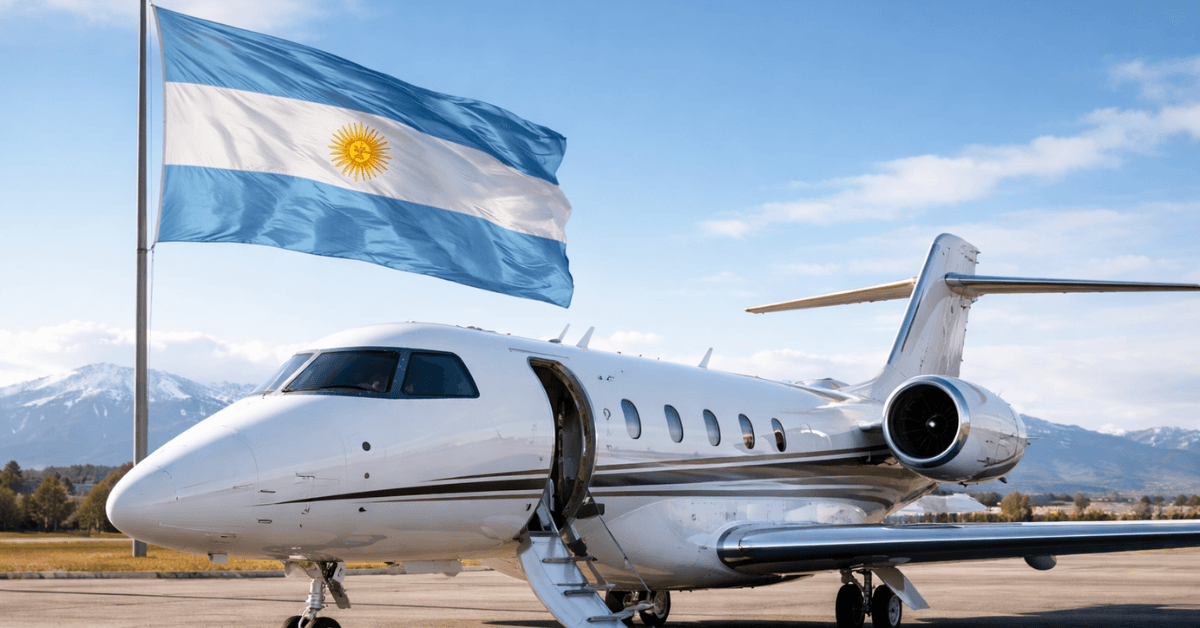
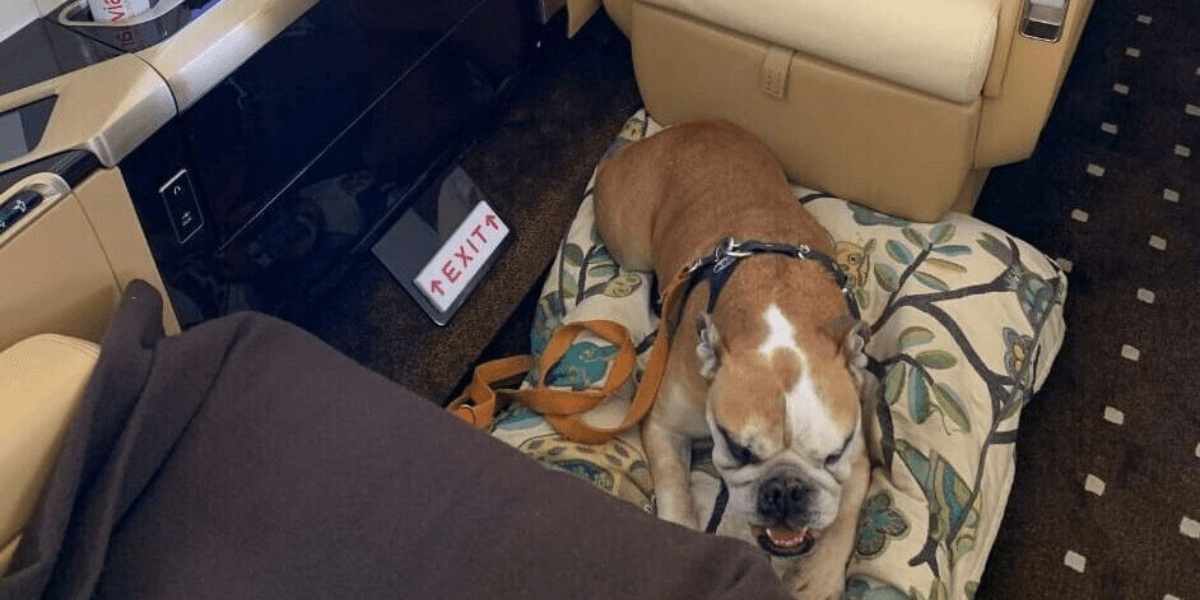
The transport of flying pets on private jet flights from the United States to Mexico is common on leisure or business flights; however, it has been identified as one of the leading factors in arrival delays. The processing of pet entry clearance differs from that of a permit or overflight approval in that it includes an airport inspection.
Mexico maintains uniform animal health controls that include all commercial and private air operators. They include procedures enforced by the SENASICA, the Mexican government agency focused on animal health and agricultural safety. They are uniform and specific in their rules, but they focus on documentation.
Pilots and crew members, however, need to understand how these rules work in practice to ensure minimal ground time, safeguard crew duty limits, and avoid last-minute problems that could delay the journey. Here is where a trip support partner plays a key role in the process.
Functions of SENASICA in private aviation
SENASICA inspection occurs independently of the customs and immigration inspection. In fact, passengers may clear the CIQ inspection easily, but their pets later undergo a review that cannot be avoided, whether on a private or a passenger plane.
They are tasked with preventing the introduction of alien animal diseases into Mexico. Their role is administrative and non-discretionary. When paperwork is incomplete, invalid, or conflicting, inspections proceed despite schedule constraints.
Operationally, pet clearance should be considered a planned arrival, not a process left to the landing phase.
Animals allowed to enter Mexico
As per official SENASICA guidelines, only dogs and cats are allowed entry into Mexico as pets as part of the standard procedure. Other important guidelines include:
- Not more than two pets per passenger
- Pets should not be less than three months old
- Animals shall exhibit good health and the absence of evidence of any infectious disease.
Animals that fall outside these categories could face extra regulations or even be refused admittance.
For other companion animals, check this guide in English.
The compulsory SENASICA entry form
Pet owners will be required to complete an official SENASICA entry form each time they enter Mexico. These forms are available online in Spanish only. There is no official English translation.
To help people who do not speak Spanish, SENASICA has a Guia Rapida that guides filling out the form correctly. Although handlers can help passengers fill out the form upon arrival, experience has shown that completing it in advance helps reduce the time spent during inspections.
The recommended procedure for the crew is to urge the passenger to submit the form before flying and, whenever possible, coordinate the submittal through the local handling agent. This will enable the relevant authorities to check the form before the plane arrives.
Required veterinary documents for entry into Mexico
In Mexico, three primary veterinary documents are required to enter a dog into the country. This applies across Mexico and for all aircraft types.
Rabies vaccination certificate: It must specify the animal type, the rabies vaccination date, and the validity period. In most cases, it takes 1 or 3 years, depending on the vaccine used.
Veterinary health certificate: A licensed veterinarian must issue this certification within 15 days before entering Mexico. Documents issued outside this period are considered null and void, though other documents are in order. This 15-day rule is among the most critical areas for crews to focus on during pre-flight planning.
Deworming certificate: It appears that the animal needs to be treated against internal and external parasites. It should be noted that SENASICA recommendations tend to accept treatment performed within 6 months before entry.
All documents should be clear and should match the details provided for the pet.
Documentation consistency and common causes of delay
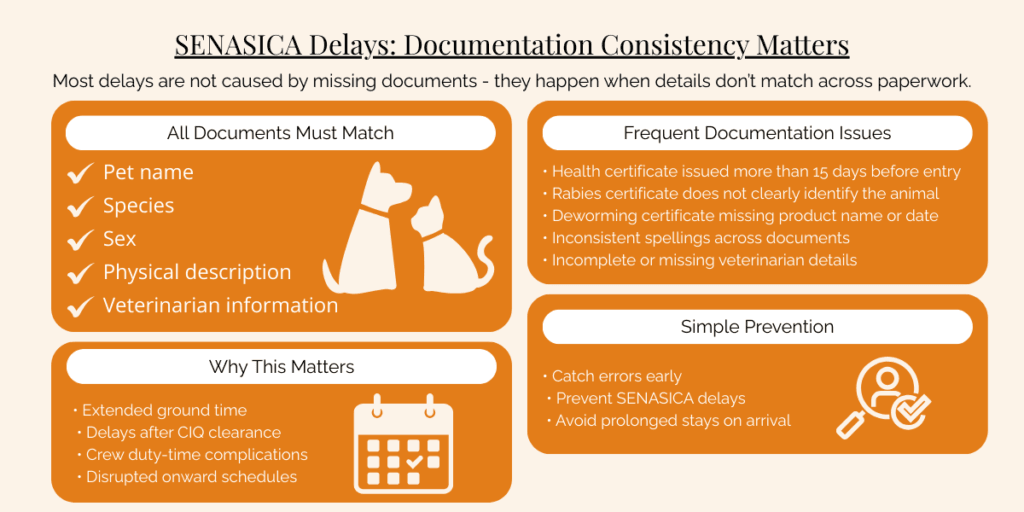
Delays at SENASICA are mostly not due to missing documents, but rather because they do not all agree with each other. The pet's name, species, sex, and description must all be consistent across the documents.
Common issues include:
- Health certificates issued more than 15 days before entry into Mexico
- Rabies documents that do not specify the animal
- Certificate of deworming without product or date specified
- Inconsistent spellings or missing veterinarian data
A quick review of documents before leaving could identify such problems, thereby avoiding a prolonged stay on arrival.
Process for arrival inspection at Mexican airports
Upon arrival, the pets undergo inspection by SENASICA after the passenger clears immigration. The inspection point depends on the airport and could be done airside, within the CIQ inspection area, or in the CIQ building.
The procedures are coordinated by the local handler in direct interaction with SENASICA officers. The landing formalities tend to be smooth if all paperwork is in order; however, a certain amount of additional ground time should always be factored in.
Significantly, SENASICA officials have the authority to conduct a physical examination of the animal. The pets must look clean and must not carry any ectoparasites. Those who appear sick will have their condition checked.
Pet food and bedding regulations
The SENASICA guidelines also cover the goods brought along with the pet. There may be restrictions on certain animal products, especially fresh or homemade food.
Commercially prepared pet food that is packaged in sealed containers is generally acceptable. However, dog handlers must be aware that officers may request the destruction of prohibited articles. Used bedding may also be inspected.
Although such restrictions are unlikely to cause any flight delays, they might come as a surprise to air travelers if not mentioned in advance.
Moving back to the United States with pets
For dogs traveling back to the US, the process of returning will be much easier. For returning, and if dogs are not being permanently imported, often the papers used for travel into Mexico can be used for easy entry into America.
Nevertheless, there are minor differences depending on the entry point in the US. Officers from Customs and Border Protection may request further information based on regional interpretations or the animal's prior travel.
They must check pet re-entry requirements with the pertinent US entry airport before leaving Mexico, especially when entering through minor or less frequently serviced entry points.
In conclusion: What does this mean to private jet pilots?
Pet clearance is among the few worldwide processes conducted in person. Unlike slots or permits, pet clearance cannot be resolved over the phone once an aircraft has landed.
Processing pet information as part of flight planning assists the flight crew in:
- Schedule integrity protection
- Decrease ramp exposure
- Avoid duty time pressure
- Enhance passenger experience
In practice, most pet-related delays are avoidable through early coordination and document review. Contact us today to support the entry of pets via private jet into Mexico.
FAQs
Do animals entering on a private plane have to quarantine in Mexico?
No. Animals that satisfy SENASICA requirements and pass the inspection do not go into quarantine.
Is the veterinary health certificate required to be recent?
Yes. The health certificate must be issued no more than 15 days before entering Mexico.
What is the maximum number of pets that one can transport to Mexico?
Two animals per passenger under the standard SENASICA procedure.
Are only dogs permitted within the above process?
Dogs and cats are allowed. Other kinds need special permission.
Are there airport-specific requirements in SENASICA?
No. SENASICA applies the same rules nationwide at all international airports.