
The 2026 Winter Olympics in Cortina d’Ampezzo will generate one of Northern Italy’s largest private aviation peaks in more than a decade. With limited GA parking at regional airports closer to the mountains, Milan Linate (LIML) and Milan Malpensa (LIMC) are expected to absorb the majority of business aviation traffic supporting the Games.
As the Opening Ceremony approaches, crews should anticipate parking saturation, documentation checks, de-icing delays, and increased demand for fuel and ground services. This blog shares key information currently available, ensuring a clear understanding of airport hours, fees, fueling conditions, customs, health requirements, and other considerations critical for operations.
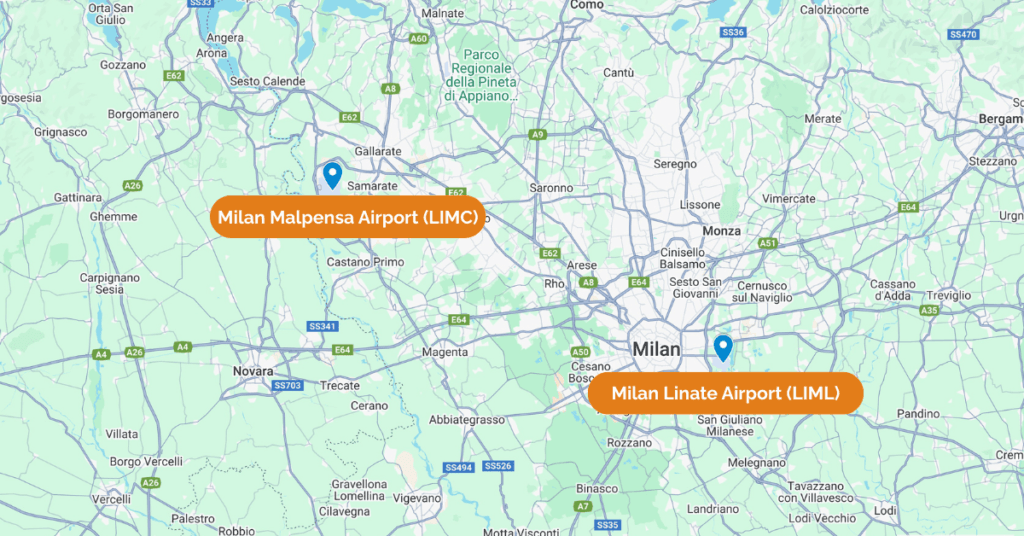
Why Milan is the primary gateway
Cortina d’Ampezzo lacks a dedicated business aviation airport, and nearby commercial airports will be under pressure from scheduled traffic. Milan offers:
- 24/7 airport operations
- Strong FBO and ground handling capacity
- Reliable winter weather performance
- Competitive runway lengths for long-range aircraft
- Direct access to Cortina via helicopter transfer
Traffic is projected to rise 7-10 days before the Opening Ceremony and continue through the closing weekend.
Milan Linate (LIML)
Ideal for corporate, charter, and short duration stays.
PPR, slots & parking
- PPR not required
- Slots not required
- Parking beyond 24 hours may require remote repositioning
This flexibility makes Linate a high-demand choice for short visits, but multi-day parking will be heavily constrained.
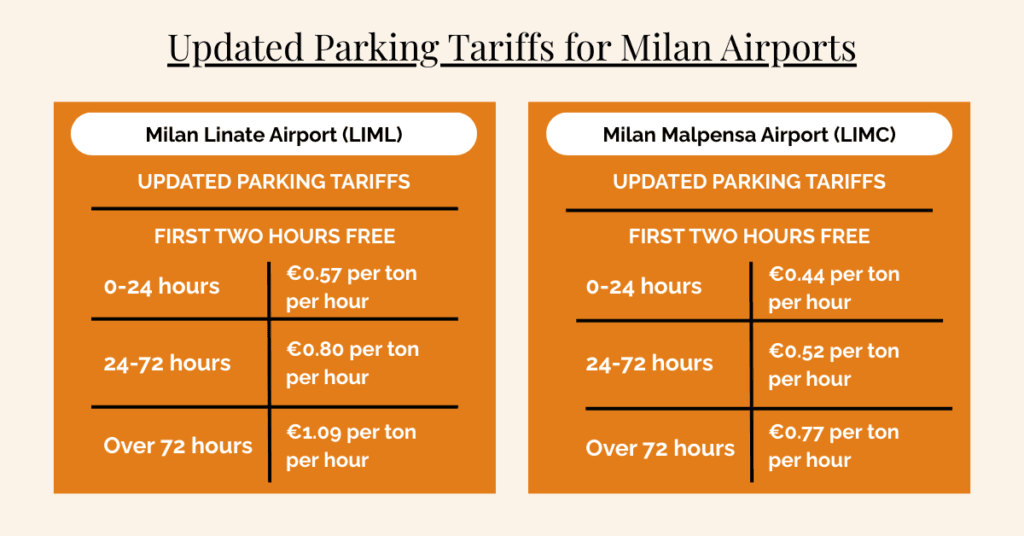
Updated parking tariffs at LIML
New official airport parking tariffs apply during the Olympics:
0-24 hours: €0.57 per ton per hour
24-72 hours: €0.80 per ton per hour
Over 72 hours: €1.09 per ton per hour
First two hours free
The fee structure is MTOW-based and will significantly impact longer stays.
FBO & airport operating hours
- FBO: 06:00–21:00 UTC
- 24-hour support available with notice only
- Airport: 24/7 operations
- Check for temporary closures via NOTAM
Fuel availability
- Fueling available 04:30-22:30 UTC
- AVGAS not available
- After-hours fueling restricted to ambulance flights
- High demand expected before and after competition days
Recommendation: Refuel on arrival to avoid morning queues.
Customs, Immigration & tax refunds
- Tax Refund Services: 08:00-15:30 UTC (only if an officer is present)
- Currency declaration required for passengers carrying €10,000 or more
- Crew require a valid Schengen visa, unless exempt
- A GENDEC is not enough for entry unless paired with an IATA-compliant Crew Member Certificate
Processing delays are expected during VIP and delegation arrivals.
Health documentation requirements
Operators must submit a declaration confirming that the aircraft has not visited countries with Aedes Aegypti, Zika, Dengue, Yellow Fever or Malaria risk within the last 28 days.
Icarus Jet is prepared to process documentation for the entire aircraft.
If arriving from a risk country:
- A Residual Disinsection Certificate must be on board (issued within the last 8 weeks).
- If unavailable, on-arrival disinsection is mandatory and requires advance request.
- Certificates are not issued immediately, so carry a valid one.
These requirements will be strictly enforced during the Games.
Milan Malpensa (LIMC)
Preferred for long-range aircraft and multi-day stays.
Parking & approvals
- No PPR or slot requirement
- Parking requires prior approval, and extensions are not granted during February
- Hangar space is fully booked for the Olympic period
Large-cabin operators should prioritize LIMC due to its runway length, parking depth, and infrastructure.
Updated parking tariffs at LIMC
Rates are slightly lower than Linate:
0-24 hours: €0.44 per ton per hour
24-72 hours: €0.52 per ton per hour
Over 72 hours: €0.77 per ton per hour
First two hours free
MTOW-based charges apply for the full duration.
FBO, GAT & airport hours
- GAT: 06:00-24:00 LT (24-hour availability with prior arrangement)
- Immigration: 07:00-23:00 LT
- Customs: 06:00-24:00 LT (after-hours requires notice)
- FBO: 08:00-22:00 LT (24-hour operations with notice)
Expect higher traffic primarily during afternoon and early evening peaks.
Fuel availability
Fuel is available through:
- Carboil (supports WFS release, BP release, and carnet solutions)
- SkyServices via Carboil
Pre-booking fuel is strongly advised.
Permit requirements
- Part 91: No landing permit required
- Part 135: AOC must be submitted
As with Linate, Part 91 operations incur double landing and take-off taxes.
De-Icing during the Olympics
Crews should expect:
- Limited equipment in high-traffic periods
- Morning delays due to frost and freezing fog
- Priority toward commercial carriers
- Variability in glycol availability
Estimated indicative costs:
- Light jets: €1,000–€1,800
- Super-mids: €2,200–€4,000
- Large cabin: €4,500–€7,500
Final pricing depends on glycol volume, temperature, and holdover time.
Airspace, ATC & restrictions
Italian airspace
- Italian airspace remains closed to Russian carriers.
- No exemptions expected during the Olympic period.
ATC load
Expect:
- IFR sequencing delays
- Morning ground delay programs
- Regulated departures during peak competition days
- Increased tactical flow management in the Milano FIR
Crews should prepare for IFPS recalculations and controlled departure windows.
You might also like: LIMC vs LIML: Which Milan airport is best for private jet flights?
LIML vs LIMC: Choosing the right airport
Select LIML for:
- Visits under 24 hours
- Smaller aircraft
- Crew needing quick access to Milan
- Same-day turnarounds
Select LIMC for:
- Extended parking
- Long-range and widebody operations
- More predictable fuel access
- Heavy-MTOW aircraft requiring longer runways
Access to Cortina d’Ampezzo
Helicopter transfers
- LIML → Cortina: 55-60 minutes
- LIMC → Cortina: 75-85 minutes
Ground transfers
- LIML → Cortina: 4h 30m
- LIMC → Cortina: 4h 50m
Ground transportation in Cortina will be limited due to Olympic demand.
Best practices for trip support during the Olympics
Crews operating to Milan during the 2026 Winter Olympics should prioritize early parking arrangements, as multi-day stays at both airports will be heavily restricted. Health declarations should be submitted as soon as flight details are confirmed, particularly for aircraft that have visited countries with mosquito-borne disease risks. Fueling is best completed on arrival to avoid peak-hour delays, and operators should anticipate de-icing queues during the coldest parts of the day.
Immigration requirements remain strict, meaning all crew must hold the appropriate Schengen documentation, and longer processing times should be expected for both Customs and Immigration as delegations and VIP passengers move through the terminals. With these layers of operational pressure, building additional time into every phase of the day-of-operation schedule is essential to maintain flexibility and avoid downstream delays.
Did we miss something? Send your comments and suggestions to our Chief Storyteller at felipe@icarusjet.com.
FAQs
1. Do LIML or LIMC require slots during the 2026 Winter Olympics?
No. Neither airport currently requires slots or PPR for private aviation. However, parking approvals, especially at LIMC, must be arranged early due to expected congestion.
2. Will hangar space be available in February?
Hangars at LIMC are already fully booked for the entire month. Linate hangar availability will be minimal, and operators should plan for open-air parking and possible de-icing.
3. What documentation is essential for arrivals from countries with Zika, Dengue, or Yellow Fever risk?
Operators must submit a health declaration confirming the aircraft’s operational history within the last 28 days. If arriving from a risk country, a Residual Disinsection Certificate issued within 8 weeks is mandatory.
4. How do landing and parking fees differ for Part 91 and Part 135 flights?
Part 91 operations incur double landing and take-off taxes compared to Part 135. Parking fees remain MTOW-based and follow standard airport tariff tables.
5. Should crews expect significant delays due to winter weather?
Yes. February weather in Northern Italy brings freezing fog, frost, and occasional snow. De-icing resources will be heavily used, and ATC may apply morning restrictions. Operators should plan for schedule buffers.