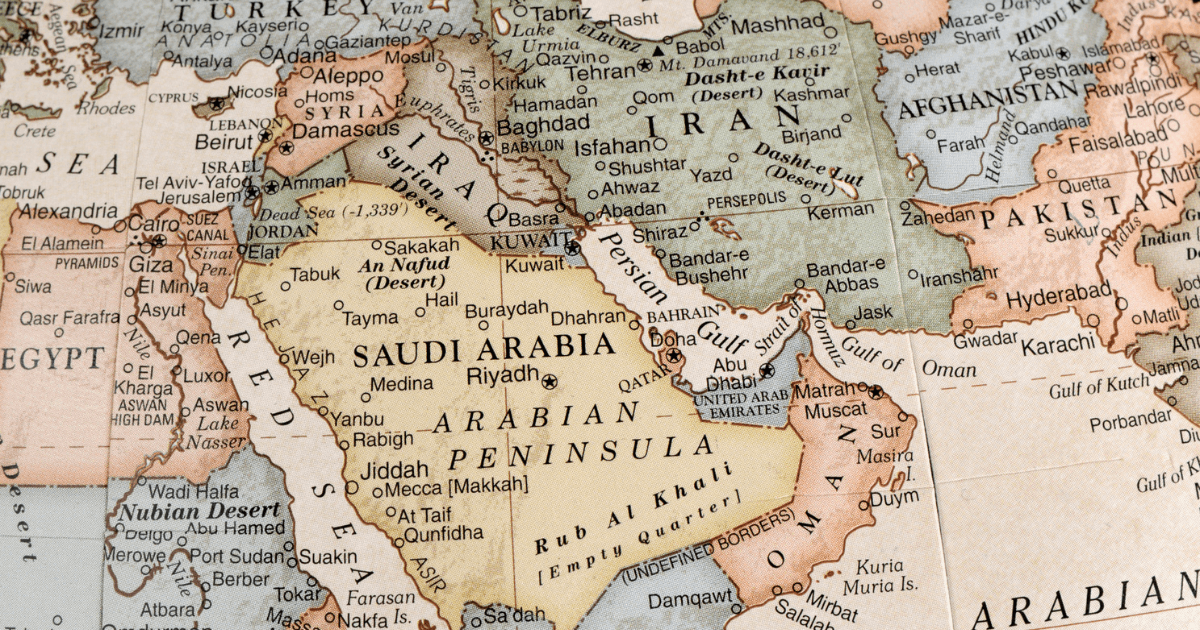
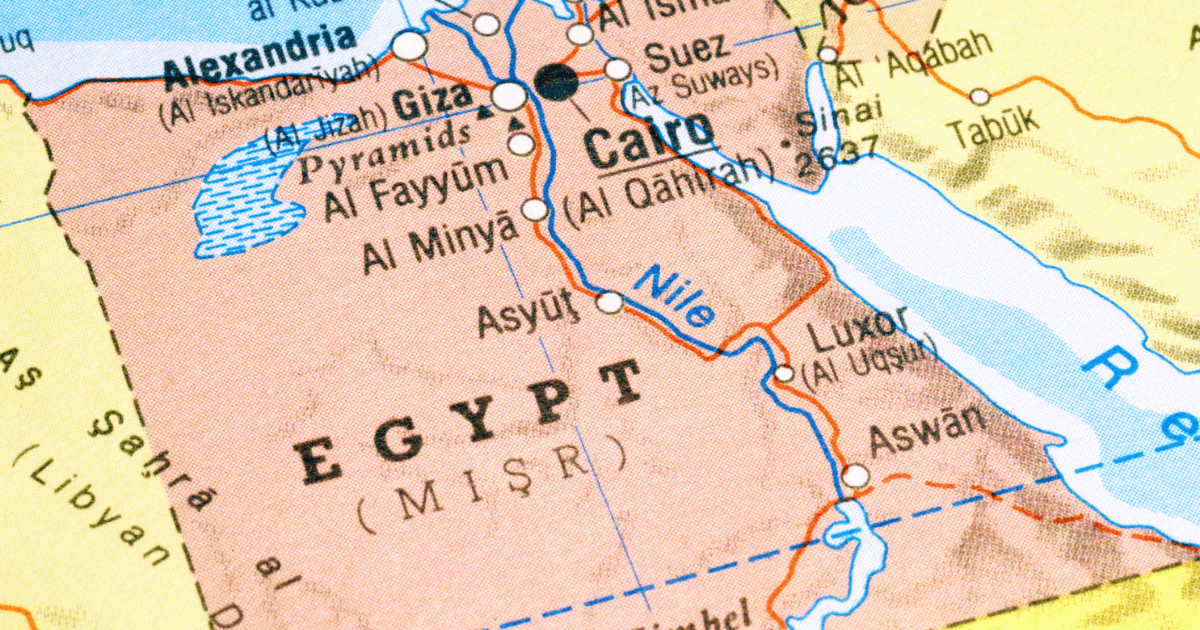
Egypt has always been a special case in international travel. It is, of course, a travel destination, with a wealth of historical, cultural, and tourist interest. However, Egypt is also a gateway, a hub connecting Europe, the Middle East, and Africa in a way unique in the world.
For private air travel, this is especially true, as Cairo serves as both a gateway and a hub in international air travel. As a hub, Egypt frequently sees aircraft flying from the Gulf to Europe, and vice versa, with the country playing a role in the travel process in several cases.
What the current travel advice really means
For travelers, the United States Department of State currently advises that Egypt is under a level 2 travel advisory, meaning travelers should exercise increased caution.
Of particular note are Northern Sinai and the Western Desert, which are currently closed, while the rest of the country remains open for international travel.
For the vast majority of travelers, the experience of flying to Egypt is much as it has always been, with the main airports in Egypt, including Cairo, Sharm El Sheikh, and Hurghada, remaining fully operational.
Furthermore, one of the most noticeable changes in recent months is the inconsistency of commercial airline flight schedules in certain parts of the region. While this is not related to airport closure, it is related to how these networks operate.
Commercial air travel operates according to a set flight schedule, determined by its efficiency. When airspace routing is inconsistent, these networks tend to adjust their flight plans rather than individual flights. While this is true, there is a noticeable gap between access and reliability, especially when traveling to a region that relies heavily on connectivity.
Why private aviation operates differently
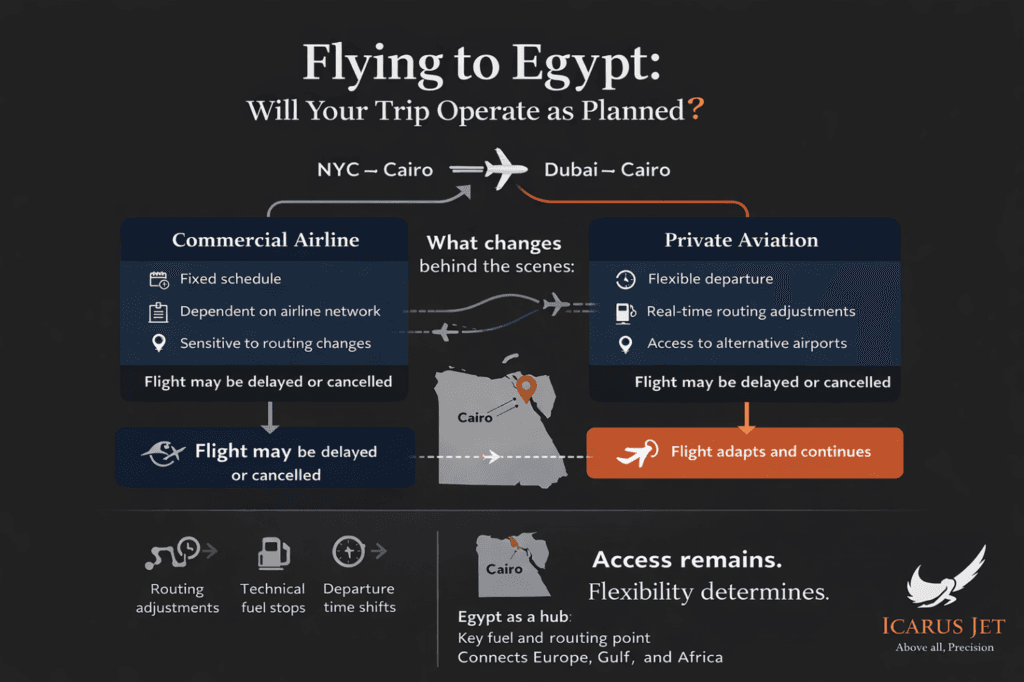
Private aviation operates within the same airspace, yet its system is quite different. While commercial air travel relies on a set flight schedule, private aviation relies on a flight plan that is determined by its mission. This is what enables them to operate despite changes in airspace routing.
When changes occur, they are made to their flight plans, not their mission. While changes to their flight plans may require them to adjust their departure time by a matter of minutes, there is no impact on their ability to reach their intended destination.
This is why private aviation can continue to operate despite changes to airspace routing, while commercial air travel cannot. While changes to airspace routing have created inconsistencies in commercial air travel, they have not affected private aviation’s ability to operate.
Egypt’s role as a technical and operational hub
Egypt’s geographic location makes it an extremely accessible hub for operations in the region. Cairo International Airport is an important technical stop for flights operating between Europe, the Gulf, and Africa.
The reason for this is the efficiency factor. Egypt enables efficient flight operations by breaking long-haul flights into manageable segments. This allows for the maximization of fuel planning and routing options. Turnaround times are also reliable for business aviation operations.
For passengers, this may feel like a stop in the flight plan. From an operational perspective, this is what makes the flight work.
Aircraft selection and routing strategy
When Egypt is included in the flight plan, the aircraft’s role becomes more prominent in the overall strategy. Long-haul aircraft are viable for this segment, as they can fly nonstop to major global markets such as Western Europe and North America. Small aircraft are also viable for this segment but may need a technical stop.
This is not an obstacle but a reflection of how private aviation can leverage geography to enable efficient flight operations. Often, Egypt serves as the midpoint, making the flight plan viable for efficient operations. This is especially true for flight plans that go beyond a specific region.
You might also like: The Complete Guide to Private Jet Charters in Cairo
What travelers may notice
Private aviation is consistent in this segment, but may be noticed in a few key ways for travelers taking longer flights through the Middle East.
- Travelers may notice:
- Small differences in departure time
Variations in overall flight time based on the flight plan
At times, a technical stop may be included as a component of a trip. These items are not disruptions; they are a component of how long-range private aviation accommodates a changing airspace system while maintaining the integrity of a trip.
In a nutshell, the Middle East is a nexus for several large long-haul markets. This means that the availability and use of aircraft in this area will change rapidly in response to evolving global conditions.
For instance, the cost of a flight is not necessarily based on the distance traveled. There are several other factors to consider, such as routing and availability. In this case, being in a hub in Egypt is a positive for a traveler because aircraft are constantly arriving and departing from this country as part of a larger trip.
When private aviation becomes a practical solution
Generally speaking, private aviation is about convenience in a static world. In a changing world, it serves as a tool that helps provide continuity.
This is particularly true in:
- Travelers with a fixed schedule
- Travelers who have a multi-country itinerary within the region
- Travelers who have limited and changing commercial flights available to them
This is a matter of planning with clarity and not concern. Travel to Egypt is not something to avoid; it requires understanding. The main destinations in this country remain active and open to international aviation.
At the same time, flight schedules may change slightly depending on routes and conditions. This is where flexibility will prove advantageous rather than a hindrance. The role of private aviation naturally fits with the situation. This is because changes can be made without affecting the overall trip.
Continuity in a changing environment
Egypt is one of the most important gateways in the region. The role of Egypt in the region has not changed. In fact, it has become even more relevant as global routes change. What is important for travelers is not the situation, but the ability to understand it. This is exactly what private aviation achieves. It does not eliminate the variables. It manages them so that the trip is not affected.
FAQs
Is it safe to travel to Egypt right now?
According to the United States Department of State, Egypt is currently at a Level 2, which means travelers should exercise increased caution. The major destinations in the country remain accessible and open to international travelers.
Are flights to Egypt being cancelled?
Yes. Some flights may be cancelled, depending on the airline’s schedule. This is true regardless of whether the airports are open.
How does private aviation avoid cancellations?
Private flights do not operate on a fixed schedule. This means changes to routes and airports can be made in real time. This reduces the chances of cancellations.
Do private jets still face restrictions on their routes?
Yes. All flights must comply with airspace restrictions. The difference is that private aviation will not cancel the flights. It will make the changes.
Is Egypt a common stop for private jets?
Yes. Cairo is a refueling stop and a common stop for private jets. This is because it is a hub between Europe, the Middle East, and Africa.