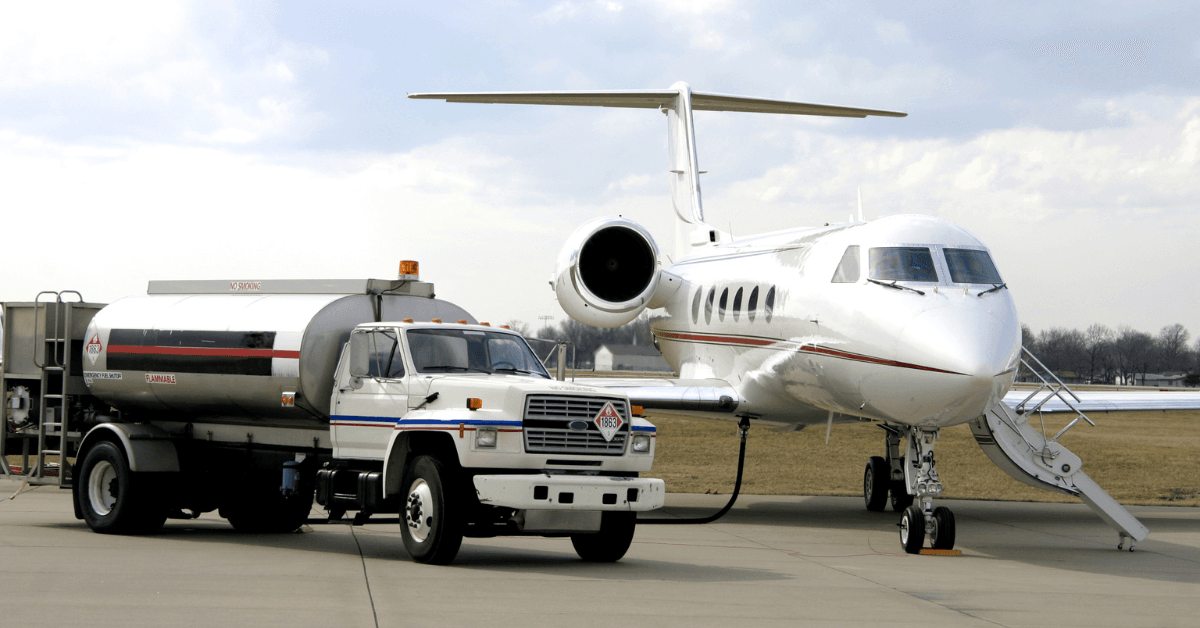
Fuel tankering has never been a talking point in business aviation. It was usually just part of the plan. You uplift where it makes sense, you avoid places where fueling is slow or unreliable, and you keep the trip moving.
ReFuelEU changes the overall ecosystem. It does not ban tankering outright, but it turns fuel uplift into something regulators expect you to prove, with annual reporting and minimum uplift rules designed to discourage routine tankering.
This is now especially relevant in Switzerland. Below we explain why.
Why the Switzerland timeline matters
Switzerland is not in the EU, but it has chosen to adopt ReFuelEU. The Swiss Federal Office of Civil Aviation confirms that, from 1 January 2026, Zurich (LSZH) and Geneva (LSGG) are treated like Union airports for ReFuelEU purposes.
That date matters because it fixes the timeline. For EU airports, the SAF blending obligation started in 2025. In Switzerland, the same logic begins at Zurich and Geneva in 2026. In practical terms, fuel suppliers at those two airports must ensure at least a 2 percent SAF blend, and the mandated share rises progressively toward 70 percent by 2050.
Switzerland also adds a second layer: FOCA, the Swiss Federal Office of Civil Aviation, has published technical guidance and explanatory material to support implementation, which is useful because it frames the rules in operational terms rather than policy language.
What ReFuelEU changes for tankering
The anti-tankering piece that operators feel first is the uplift obligation.
ReFuelEU requires aircraft operators, within scope, to ensure that the yearly quantity of fuel uplifted at a given Union airport is at least 90 percent of the yearly fuel required at that airport. This is important because it is not assessed flight by flight. It is assessed by aggregating all flights at that airport across the year.
That single detail changes how tankering looks. A one-off decision to tanker for operational reasons is not the issue. A consistent pattern of avoiding uplift at specific airports becomes visible once the year is totaled up.
Which business aviation operators are most exposed
Not every business aviation flight is treated the same way. The real exposure is on the commercial side, where operations resemble airline-style reporting obligations and volume thresholds are more likely to be met.
Private, non-commercial flights are generally not the target of the regulation. Commercial business aviation, particularly charter and managed fleets operating under an AOC structure, is where the compliance conversation tends to start, because those operators already sit in regulated reporting environments.
Fuel planning becomes a compliance question
Before ReFuelEU, fuel planning was a balance of payload, schedule, pricing, and operational risk. Now there is an extra question in the room: how does this decision affect the annual uplift position at this airport.
This is where some operators are surprised. They assume the rule is rigid on every leg. It is not. But the annual aggregation approach means the operator needs consistency across the year.
Operationally, it nudges behavior in predictable ways. You see more local uplift at premium airports. You see fewer systematic tankering habits. You also see more internal attention on fuel invoices and uplift records, because those become compliance inputs.
SAF blending and the cost reality
ReFuelEU is not only an anti-tankering story. It is a SAF supply story. For operators, this shows up in two places:
First, cost. Blended fuel is typically more expensive than conventional jet fuel, and even if an operator is not making an active SAF choice, the uplift may include SAF content because suppliers must meet blending obligations.
Second, availability and predictability. Larger hubs adjust faster. Smaller airports can be uneven, which matters to business aviation because the network is not limited to major capitals. Switzerland’s FOCA notes the need for coordination across the supply chain, including fuel suppliers and airports, which is a practical way of acknowledging those constraints.
You might also like: Why unlocking SAF supply is the key to sustainable aviation
What changes at airports like Zurich and Geneva
Zurich and Geneva are relevant because they are busy and they are Switzerland’s two airports brought into ReFuelEU from 1 January 2026.
When local uplift becomes less optional for in-scope operators, ground handling and fueling capacity starts to matter more. You may feel it in peak periods as longer fueling queues or more fragile turnaround margins, especially for short-notice movements. It does not stop operations, but it reduces the slack that business aviation often relies on.
Top five operational takeaways

- From 1 January 2026, Switzerland applies ReFuelEU at Zurich and Geneva, so departures from LSZH and LSGG need to be planned as if they were Union airports for uplift and SAF compliance.
- The 90 percent uplift requirement is measured annually per airport, not per flight, which means patterns matter more than exceptions.
- SAF blending starts at 2 percent and rises toward 70 percent by 2050, increasing the likelihood of higher fuel costs and less pricing predictability at in-scope airports.
- Commercial business aviation operators are more likely to be affected than private flights, because the regulation is built around operator obligations and reporting frameworks typical of commercial activity.
- FOCA guidance exists to support the transition, which is worth using internally because it helps translate policy requirements into operational expectations for Swiss departures.
Reach out today to our trip support team to understand how ReFuelEU might impact your operations in the continent.
FAQs
Does ReFuelEU ban fuel tankering in business aviation?
No. It discourages systematic tankering through the uplift obligation and annual reporting, but it does not prohibit carrying extra fuel on a specific leg.
Is the 90 percent uplift rule checked on each flight?
No. It is calculated annually, aggregated at each in-scope airport for the operator’s flights.
When does this apply in Switzerland?
Switzerland applies ReFuelEU at Zurich and Geneva from 1 January 2026.
What is the SAF requirement operators should expect?
Fuel suppliers must ensure minimum SAF blending, starting at 2 percent and increasing progressively toward 70 percent by 2050. For Switzerland, FOCA’s SAF quota material specifically references Zurich and Geneva under this requirement.
What should your ops teams do differently now?
Treat fuel uplift and invoicing as compliance-grade data for in-scope activity, and plan uplift behavior with the annual airport-level aggregation in mind, especially for repeated Swiss departures from LSZH and LSGG.