For those new to charter flights, the focus is naturally on the aircraft itself: how comfortable it is inside, how far it can travel, how much luggage it can carry, and how the crew treats you on board. However, a lot of the private jet experience happens pre-flight. It starts on the ground, and for private jets, this is at the FBO.
Knowing what an FBO (Fixed Base Operator) is, how it works, and how it differs from the main commercial airport is a must for anyone looking to charter a private jet or a group charter.
This blog explores what to expect at an FBO while providing information on the two main departure options for private jet and group charter flights.
What is an FBO, and why is it important?
An FBO is a private aviation terminal located within an airport. Unlike the main commercial airport building, which is designed to handle scheduled commercial flights, the FBO is designed to handle business aviation or private aircraft flights.
Firstly, it is a controlled environment for private aviation passengers. Secondly, it is a platform that provides operational services for private aircraft flights.
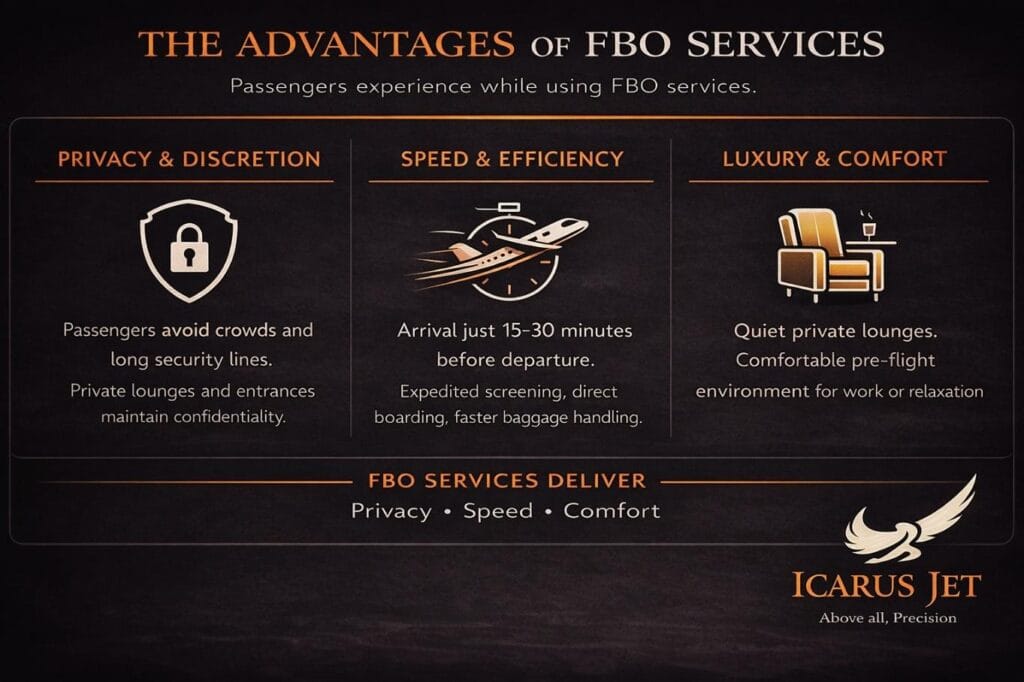
For smaller private jets, the FBO experience is the entire departure process. It replaces the check-in counters, security lines, and boarding gates associated with commercial travel.
What happens when you arrive at an FBO
The arrival process at an FBO is equally efficient. Rather than going through the main airport terminal, passengers drive directly to the FBO.
The arrival process is as follows:
- Identification verification
- Luggage is discreetly handled by ground staff
- Wait in the private lounge
- Direct escort across the ramp to the aircraft
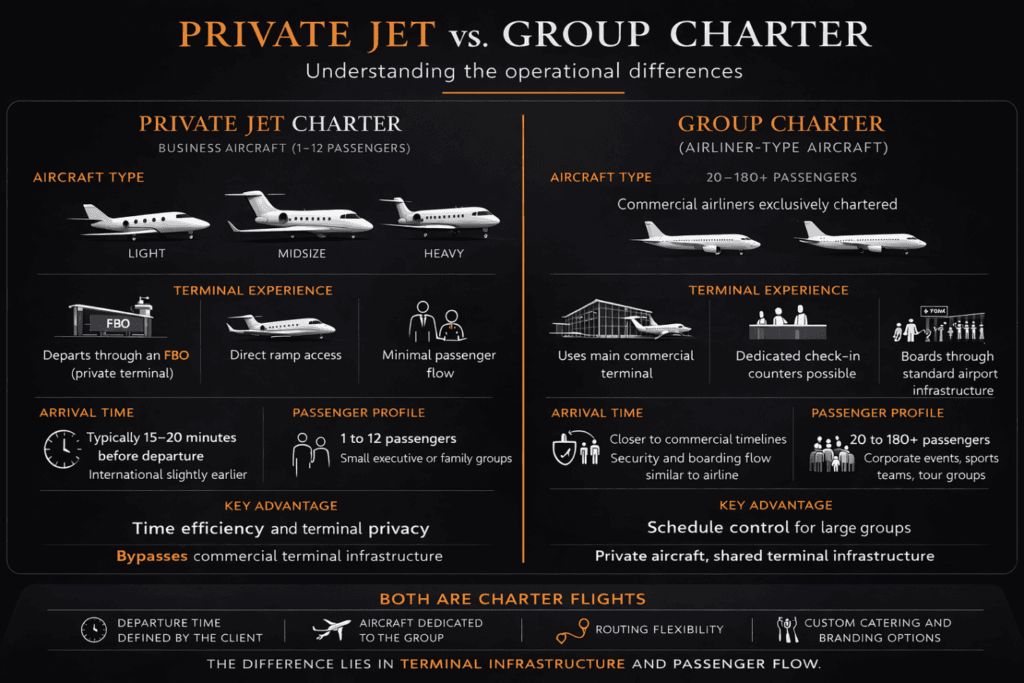
For domestic flights, passengers are recommended to arrive 15 to 20 minutes prior to departure. For international flights, 30 minutes is more than enough.
Security requirements are met, but the process is efficient and free of the congestion associated with airline terminals.
Group charter vs. private jet charter
There is often an assumption that all charter flights depart from private terminals. However, there are two different processes.
For large group charter flights on regional-type aircraft, passengers depart from the main commercial airport terminals. Although the charter is exclusive and passengers can determine the day, time, and destination of the flight, the departure process occurs through the main terminal.
In a nutshell, this model allows the passengers to have exclusive use of the aircraft and control over the departure time. However, it is not necessarily through a private terminal.
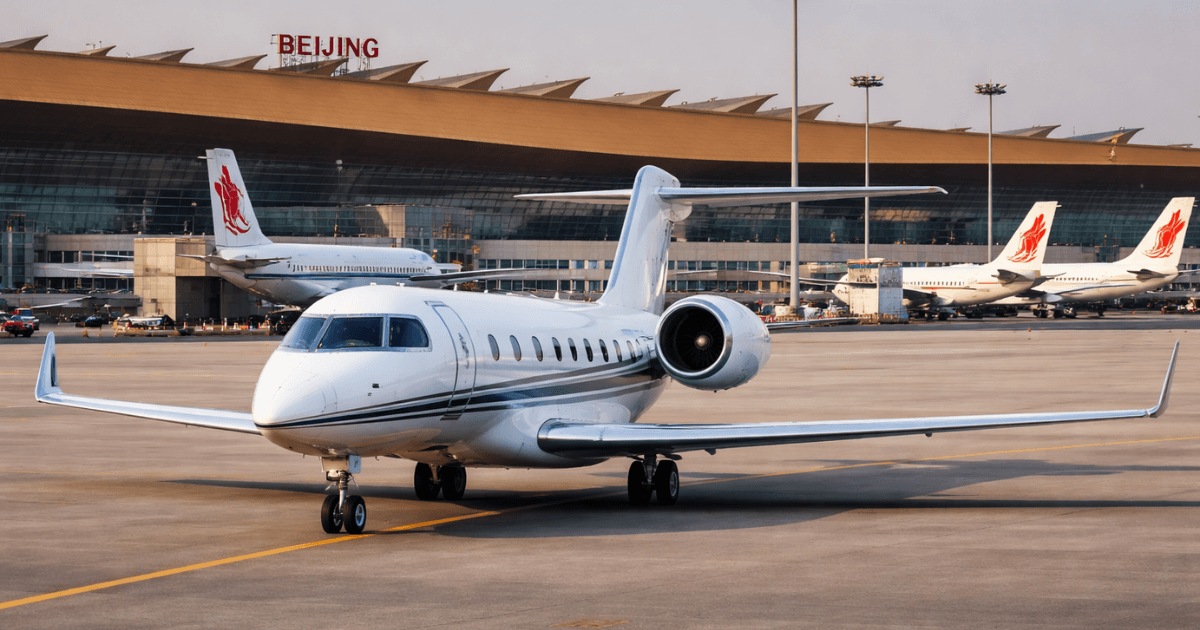
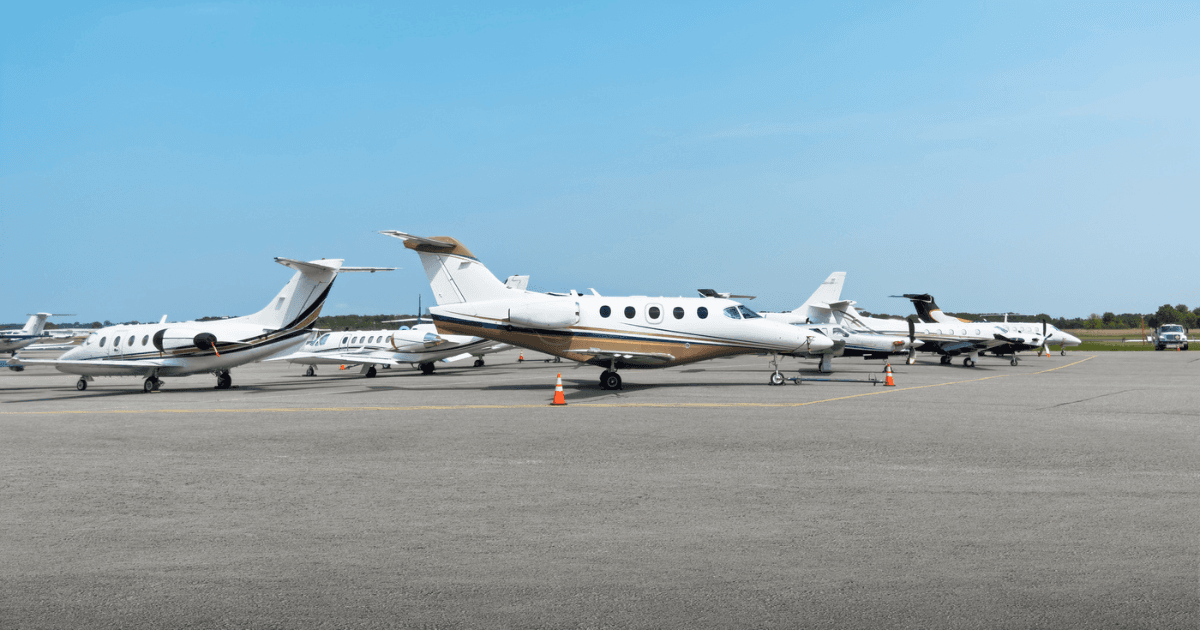
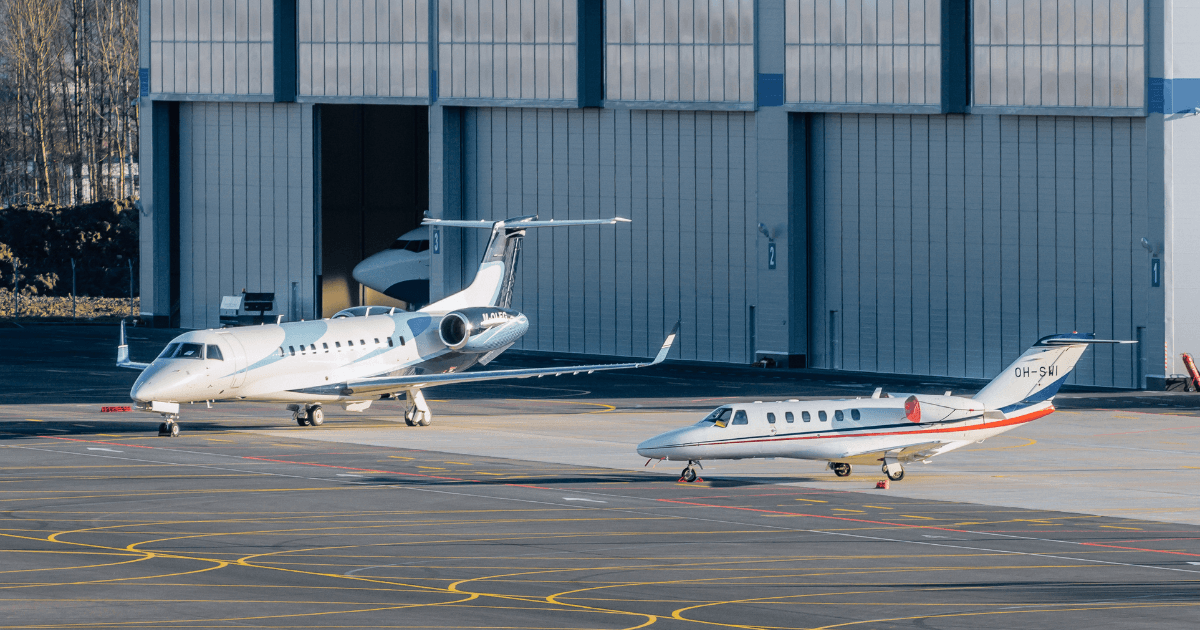
By contrast, business jets of all sizes and turboprops almost always operate through FBOs. Aircraft like the Cessna Citation CJ3, Embraer Phenom 300, and Bombardier Challenger 350 operate from a private aviation terminal, not the main building.
In this case, passengers completely skip the airline check-in counters and gates. The aircraft is located at a private aviation terminal, and passengers board directly.
Knowing the difference is essential in setting expectations. Both options are charter flights. The only difference is that one operates through an FBO, while the other does not.
The operational role behind the scenes
Passenger experience is important, but the FBO’s role in the background is just as crucial.
The ground staff handle fuel, parking, catering, lavatory servicing, water, and flight plans, while crew members use the FBO for weather and document preparation.
Business aviation airports like Teterboro Airport, Nice Côte d’Azur Airport, and Farnborough Airport offer specialized facilities that cater to the needs of private aviation aircraft.
For international flights, customs and immigration services operate within or around the FBO. They often send their staff directly to the FBO, reducing congestion and passenger wait times.
The FBO manages all services, which enables the aircraft to depart on schedule.
Setting realistic expectations
The flexibility that private aviation offers is undeniable, but it still has its limitations and rules. Curfew, slot, and crew rest rules still apply.
Passengers can specify a departure time and select an airport closer to their destination. However, these are subject to operational feasibility.
If you are traveling in a large group, the best option is the chartered airliner, which can depart through the main terminal. If you are traveling on a regular business jet, the FBO is an integral part of the experience. Private aviation companies like Icarus help determine the best airport for your reply and subsequently the most suitable FBO available.
Learning how FBOs work helps to clarify what makes private air travel unique from public air travel. The aircraft determines the ability and reach. The terminal determines how the trip begins.
FAQs
Do all private charter flights use an FBO?
No. Private jets and turboprop aircraft always use FBOs when available. Large group charters on regional-type aircraft always depart through the main commercial terminal, even though the aircraft is chartered by a private party.
How early do I need to arrive at an FBO?
For domestic flights, 15-20 minutes prior to departure is the norm. For international flights, a slightly earlier arrival is recommended.
Is there security screening at an FBO?
Yes. Security is still required, but it is done discreetly and efficiently. It is faster and less crowded than the main terminals.
Can customs be cleared at an FBO?
Yes. In many countries, customs and immigration can process passengers within or adjacent to the private terminals.
Are FBOs more expensive to use?
FBOs are an operational cost of private aircraft travel. While the costs vary by airport, they are generally included in the overall charter cost and not an additional passenger charge.